5 Lawn Mower Warning Signs You Should Never Ignore
Your mower talks to you. The trouble is that most people tune out the early signals until a $40 repair has quietly grown into a $400 one. A slightly rough idle in May becomes a seized engine in July. A faint burning smell turns into a blown gasket. The machine almost always gives you fair warning before it quits, usually weeks ahead of a complete breakdown.
Learning to read those signals is the most valuable skill a mower owner can pick up. This lawn mower troubleshooting guide walks through five of the most common warning signs, what each one likely means, and whether you can handle it in your own garage or whether it's time to bring it into a shop. We'll keep the language plain and the advice practical, so you can act on it the next time your mower starts acting up.
A quick safety note before we start: always shut off the engine and disconnect the spark plug wire before inspecting any part of your mower. A blade can turn unexpectedly even with the engine off, and that's how fingers get lost.
1. Rough Idling and Engine Surging
If your mower sputters, shakes at low speed, or revs up and down on its own (a pattern often called surging or hunting), the engine is struggling to find a steady balance of fuel, air, and spark. This is one of the most common lawn mower problems and solutions homeowners search for, and the good news is that the usual causes are simple.
A lawn mower runs rough when something throws off the balance of fuel, air, and spark the engine needs to work properly. The three things to check first, in order:
- Stale fuel: Gas that has sat over winter breaks down and gums up the works. If your mower has been idle for months, old fuel is the prime suspect. Drain it and refill with fresh fuel.
- Clogged air filter: A dirty filter chokes airflow, which makes the engine run unevenly. Many surging issues clear up the moment a filthy filter is cleaned or replaced.
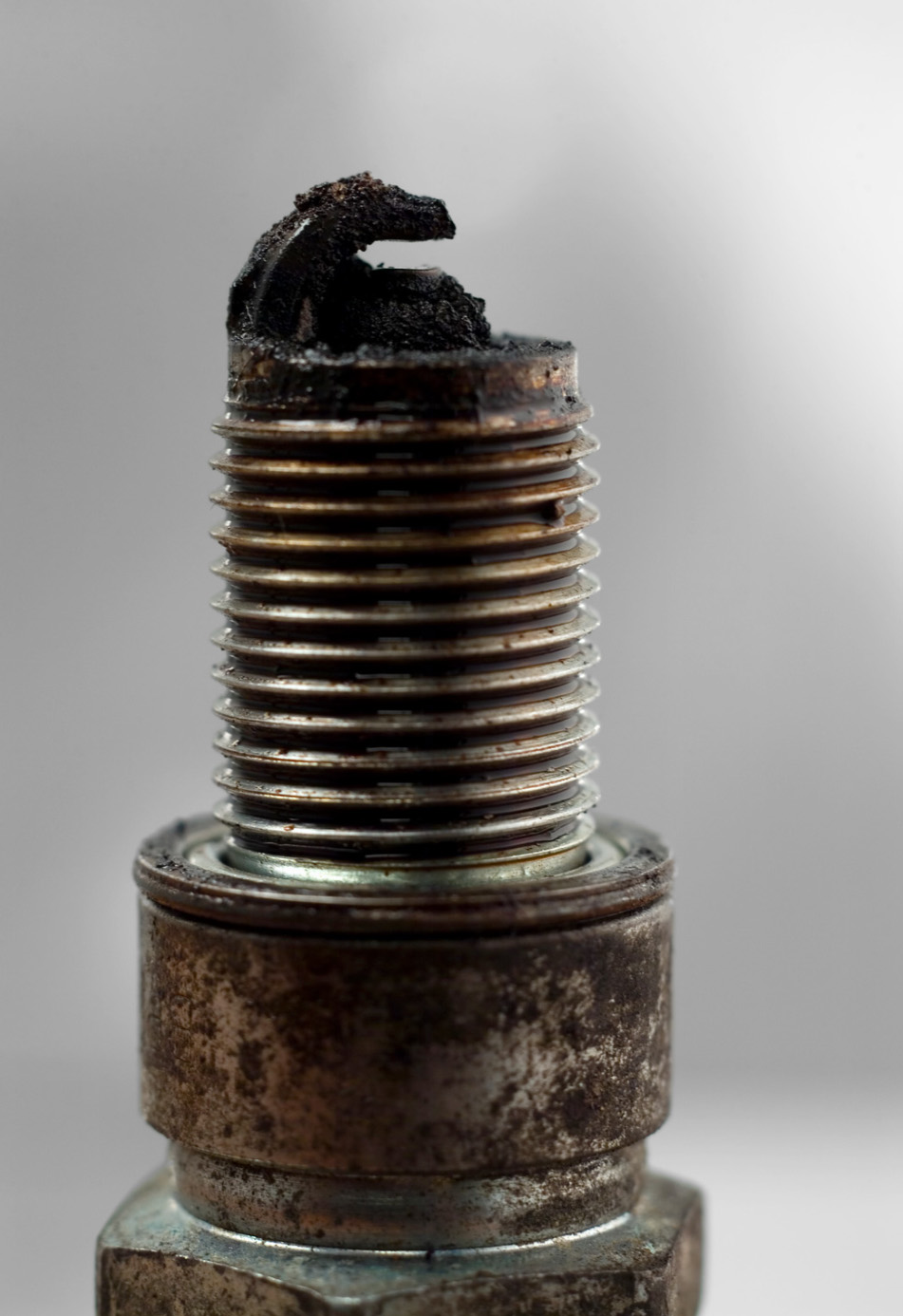
- Dirty or worn spark plug: A fouled plug fires inconsistently, causing misfires and rough running. Plugs are cheap and easy to swap.
An engine that idles up and down often has an airflow problem. When air gets blocked sporadically, the engine slows down and then revs back up as the blockage clears.
DIY or shop? Fresh fuel, a new air filter, and a spark plug swap are all weekend jobs. If you've done all three and the surging continues, the carburetor likely needs cleaning or adjustment, which is where a professional saves you frustration. Our parts and service team handles carburetor work routinely.
2. Uneven or Ragged Cuts
If your lawn looks scalped in some spots and untouched in others, or the grass tips turn brown a day after mowing, your mower is tearing the grass instead of slicing it cleanly. The culprit is almost always the blade.
A dull or damaged blade won't cut grass evenly. Beyond looking bad, a ragged cut stresses your lawn and opens the door to disease, since torn grass tips lose moisture and invite fungus. Here's what to look at:
- Dull blade: The most common cause. Blades should be sharpened regularly throughout the season.
- Bent or chipped blade: Hitting a rock or root can deform the cutting edge. A damaged blade should be replaced rather than sharpened.
- Uneven deck height: If the mower deck sits lower on one side, you'll get a stepped, uneven cut even with a perfect blade.
- Built-up grass under the deck: Caked clippings choke airflow and prevent grass from standing up to be cut.
When Sharpening Isn't Enough
Sharpening fixes a dull blade, but it can't fix a bent one. If you sharpen the blade and still get an uneven cut, inspect for bending or check whether the deck is level. We cover blade care and seasonal prep in more detail in our guide on prepping your lawn and equipment for peak season. For replacement blades that fit your specific machine, our parts staff can match the right one to your model.
DIY or shop? Blade sharpening, replacement, and deck cleaning are manageable at home with basic tools. Deck leveling and blade balancing are worth handing to a shop if you're not confident, since an unbalanced blade creates a whole new problem (see the next sign).
3. Excessive Vibration
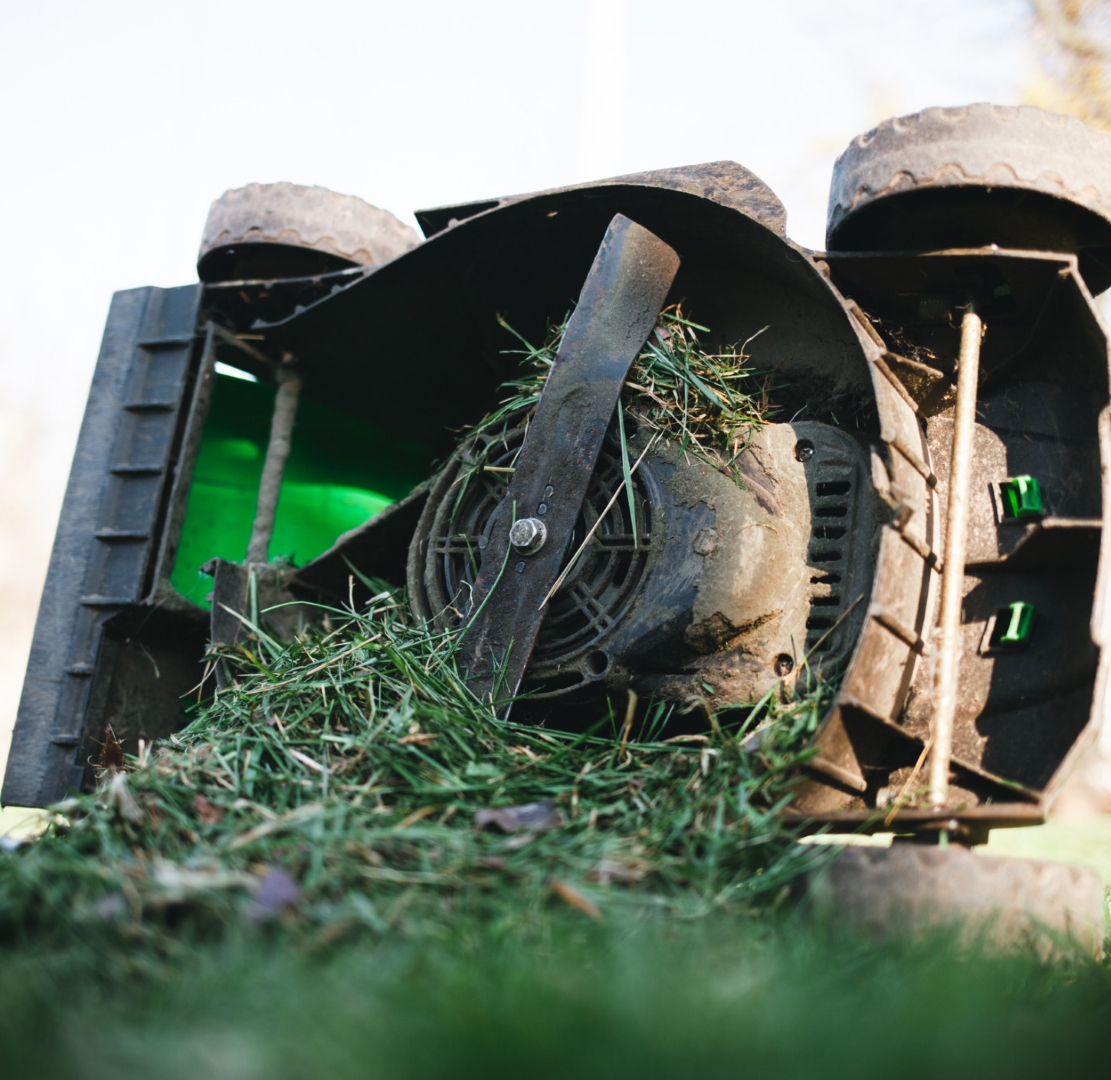
A mower that suddenly rattles and shakes hard enough to numb your hands is telling you something is physically out of balance, and this is one warning sign you should act on immediately. When you notice your lawn mower vibrating too much, stop the engine right away.
The most frequent causes:
- Unbalanced blade: When one side of the blade is heavier than the other, the spinning creates uneven force, much like a washing machine with a lopsided load. This often happens after an uneven sharpening job. You can test balance by hanging the blade on a nail through its center hole; the heavy side drops lower.
- Bent crankshaft: If the mower struck something solid like a rock or stump, the sudden stop can bend the crankshaft. Even a slight bend causes serious vibration and requires professional repair.
- Loose deck components or worn bearings: Bolts that have rattled loose over time, or worn spindle bearings, can also produce shaking.
A bent crankshaft can be dangerous if it isn't addressed, so if you suspect blade or crankshaft damage, stop using the mower and have it serviced.
DIY or shop? Tightening loose bolts and rebalancing a blade are doable at home. A bent crankshaft is a definite shop visit, since it requires specialized tools to diagnose and repair safely. If the vibration appeared right after hitting an obstacle, treat it as a shop job from the start.
4. Smoke or a Burning Smell
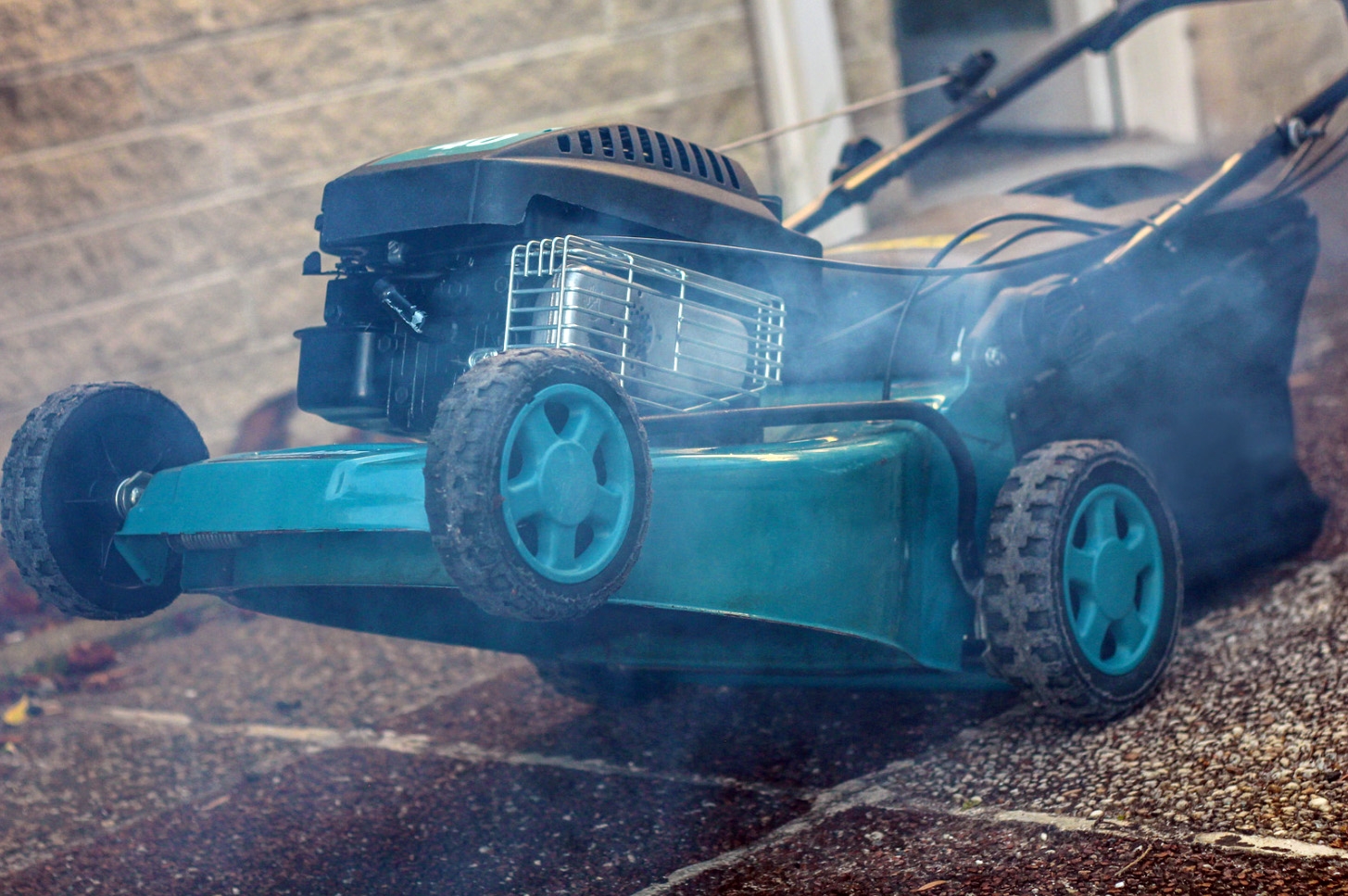
Smoke is alarming, but the color tells you a lot about how serious the problem is. Before troubleshooting, take note of what color you're seeing.
- White or blue smoke: Almost always means the engine is burning oil. White or bluish smoke usually points to oil reaching the combustion chamber. The most common and least serious cause is simply overfilled oil, or oil that spilled onto hot engine parts after the mower was tipped on its side. It often burns off on its own within a few minutes.
- Black smoke: Means the engine is burning too much fuel, a condition called running rich. A clogged air filter is the usual offender, since it starves the engine of the air needed to balance the fuel mixture.
- Burning rubber smell: On a riding mower, especially when you engage the blades, this often points to a slipping or worn drive belt rather than an engine problem.
When to Stop the Engine Immediately
Thin white smoke that clears after a few minutes is usually harmless. But thick white smoke combined with oil spitting out is a stop-now situation that can ruin an engine quickly. If you check the oil and find it overfilled or smelling of gasoline, do not run the engine, since gas-thinned oil offers no protection to engine parts. A persistent blue haze that doesn't clear can signal worn piston rings or valve seals, which is internal engine wear that needs a professional lawnmower repair.
DIY or shop? Checking and correcting oil level, cleaning spilled oil, and replacing a clogged air filter are all straightforward home fixes. Persistent smoke after those checks, oil contaminated with fuel, or a slipping belt are all reasons to book professional mower repair in Edmonton.
5. Hard Starting (When Your Lawn Mower Won't Start)
Few things are more frustrating than yanking the pull cord ten times while your grass keeps growing. When your lawn mower won't start Edmonton homeowners can assume the cause traces back to how it was stored, especially when the problem crops up at the start of the spring season.
The leading suspects:
- Stale fuel: Again, the number one offender after winter storage. Ethanol-blended gas absorbs moisture and degrades over a few months, leaving deposits that block fuel flow.
- Fouled spark plug: A carbon-coated or worn plug may not produce a strong enough spark to fire the engine.
- Clogged carburetor: Old fuel residue frequently blocks the tiny passages inside the carburetor, which prevents proper fuel delivery.
- Dirty air filter or low oil: Both can prevent a clean start.
If the engine sputters when starting and the cord is hard to pull, the flywheel key may be damaged, which is a different repair worth having checked.
DIY or shop? Start with the basics: fresh fuel, a new spark plug, a clean air filter, and a check of the oil level. This resolves the majority of no-start cases. If the mower still won't fire after that, the carburetor probably needs cleaning or rebuilding, which is one of the most common services we perform each spring. Rather than fight it for an afternoon, our team can usually have it sorted quickly.
Catch Problems Early and Save Money
The pattern across all five of these warning signs is the same. A small issue caught early is cheap and often a do-it-yourself fix. The same issue ignored for a few weeks becomes an expensive repair or a replacement machine. Stale fuel, dull blades, clogged filters, and dirty spark plugs cause the lion's share of mower troubles, and all of them are easy to address before they cascade into something serious.
Regular lawnmower maintenance is the best insurance. Sharpen your blade, change the oil, swap the filter, and use fresh fuel, and most of these problems never appear in the first place. When you'd rather hand it to someone who does this every day, that's exactly what we're here for.
Bring Your Mower to Edmonton's Repair Experts
If your mower is showing any of these warning signs and you'd like a professional diagnosis, The Lawnmower Hospital has kept Edmonton's lawn care equipment running for decades. Our technicians handle everything from carburetor cleaning and blade balancing to full engine diagnostics, with genuine parts for every major brand.
When you need a lawn mower repair Edmonton homeowners can turn to the mower experts. Contact us today for a consultation! Call 780-437-1851, or stop by our Edmonton shop at 7555 72A Street NW. Catch the warning signs early, and we'll help you get back to a clean, easy cut.